Why Do I Have to Learn Maths?
"Why do I have to learn maths?"
If you are a parent, you have probably heard some version of this at the kitchen table. If you are a student, you have probably asked it. And if you are a teacher, you have answered it more times than you can count.
It is a fair question, and it deserves a better answer than "because it is on the test".
So here is the honest answer, for both of you.
Maths is not really about 2 + 2
Nobody grows up urgently needing to solve 2 + 2. The sums are the practice, not the point.
What maths actually teaches you is how to think when the answer is not obvious yet: how to break a messy problem into smaller steps, how to spot a pattern, how to check whether a result even makes sense, and how to keep going when you are unsure.
That skill does not carry a subject label later in life. It simply shows up, constantly.
The maths you already used before 9am
- 7:00am: you worked out how many minutes were left before you had to leave.
- 7:20am: you doubled a recipe, or halved a scoop because there was less left in the tin.
- 8:05am: you judged a gap in traffic and decided whether there was room to pull out.
- 8:30am: you estimated whether you were going to be late, and by how much.
- 9:00am: you compared two prices at the shops and checked that the change was right.

Not one moment of that felt like a maths lesson. Every moment of it was maths.
Parking a car is geometry
Think about the last time you parked. You had to judge an angle, estimate a distance in centimetres you never measured, and picture how the car would move through space before it moved.
Angles and estimation are not abstract topics in a textbook. They are the reason you can park without denting anyone.
Angles, area and volume are tools, not trivia
- Measuring a wall before buying a shelf, a rug or a couch.
- Working out how much paint covers a room, so you do not buy three tins for two walls.
- Tiling a splashback, where every cut is an angle and a measurement.
- Filling a pool, a water tank or a fish tank without overflowing it.
- Splitting a bill fairly, working out a tip, understanding the interest on a loan or a phone plan.
- Comparing "30% off" against "buy two get one free" to see which is actually cheaper.
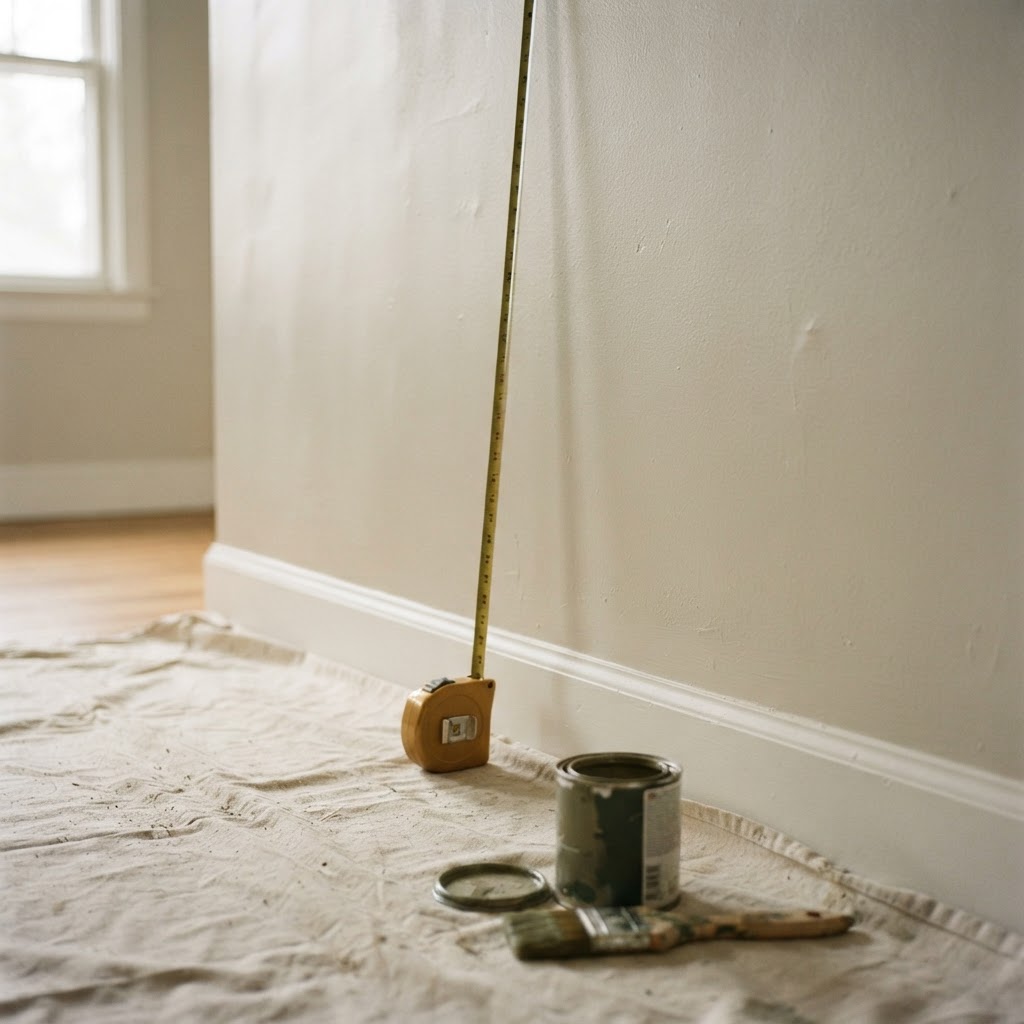
Adults do this every week. Often without noticing, because it stopped feeling like maths years ago.
Your brain has muscles too
I often tell students that maths is a gym for the brain. It sounds like a pep talk, but it is closer to a description.
Every time you work through a problem you cannot immediately solve, you are practising holding information in your head, ordering the steps, and testing whether your answer is reasonable. Those are the same mental muscles you use to plan a trip, follow a recipe, learn an instrument or stay calm under pressure.
You know the feeling of a workout where the last few repetitions are hard? That difficulty is the entire point. If every problem were easy, nothing would be growing.
So confusion is not proof that you are bad at maths. It is a sign that you have reached the part that is actually building something.
"But I do not want to be a mathematician"
Good news: you do not have to be. Here is what maths really protects, and that is your options.
- A chef scales recipes, costs a menu and works out portion sizes.
- A nurse or paramedic calculates doses by weight, along with rates and drip times.
- An electrician, carpenter or builder measures, works with angles and orders the right quantity of material.
- A hairdresser mixes colour in ratios and works to a time budget.
- A designer or artist works with proportion, symmetry and scale.
- An athlete or coach uses pace, splits, angles and statistics.
- A business owner prices, tracks margins, pays wages and understands tax.
- A programmer, gamer or creator deals in probability, patterns and optimisation.
- A journalist, lawyer or manager has to read numbers and claims carefully.
The exact formula from Year 8 may never come back. But without the foundations, doors quietly close at 16 because maths felt impossible at 13. That is the real cost, and it is preventable, at any age. Foundations are built early in primary school tutoring, and rebuilt carefully in high school tutoring for students who need a second run at them.
For students: three things worth remembering
- Speed is not the same as understanding. Some of the strongest mathematicians are slow, careful thinkers. Being quick is a habit, not a talent.
- Struggle is not failure. It is the exercise. The wobble is where the learning happens.
- You are learning a language. Maths describes how the world actually behaves. Every problem you finish makes the next one a little more readable.
For parents: how to make maths feel normal at home
- Say it out loud. "Here is where I am using maths right now": shopping, cooking, budgeting, measuring.
- Let them handle real money, even briefly. Counting change and comparing prices teaches more than a worksheet.
- Cook, build, measure and plan together. Halve the recipe. Measure the timber. Estimate the drive time.
- Praise effort and strategy, not speed. "I like how you broke that into two steps" beats "you are so fast".
- Never say "I was never good at maths." Children hear permission to give up. If you found it hard, the more useful sentence is: "I found this hard too, and here is what helped me."
- Talk about options, not marks. Maths is not a scoreboard. It is what keeps certain doors unlocked.
The bottom line
Learning maths is not only about earning a mark. It is about being able to think clearly about money, time, space, risk and decisions for the rest of your life, no matter what you choose to become.
The good news is that maths is not a talent you either have or do not have. It is a skill, built in small steps, and almost always fixable once someone finds the right starting point.
If your child has hit a wall with maths, that is exactly what we do every day in our maths tutoring program. It is also the thinking behind our Singapore Maths approach, which builds understanding before speed. Book a free assessment and we will find the gap, not just the mark: Book a free assessment
And if a specific exam is on the horizon, our NAPLAN preparation, ICAS and scholarship exam preparation programs apply the same thinking-first approach to exam-style practice.
Keep reading
Explore Golden Pencil
Our Tutoring Programs